Account
 Call Us
 Location

Choosing a violin bow can be confusing. With so many options on the market, it’s easy to assume the most expensive bow is the best. But if you’re a beginner, you don’t need a high-end bow just yet. Instead, look for one that helps you play comfortably, learn basic technique, and develop control.
For most new players, a good student bow should have a reasonably strong stick and proper balance. It should be an extension of your right hand and move with you as you play, not work against you.
Materials explained
Bows are usually made from wood, fiberglass, or carbon fiber. Each material has advantages that affect the price, playing level, and durability.
Wood bows are the gold standard for their traditional craftsmanship, flexibility, and nuanced, warm sound. However, they can vary widely in quality. Some inexpensive wood bows are made from brazilwood, while higher-level bows may be created from pernambuco wood, which is the wood of choice for the best bows.
Fiberglass bows are common with lower-priced beginner instruments. They’re durable and affordable, which makes them a practical choice for young beginners or school programs. The tradeoff is they offer less responsiveness and tonal nuance than better materials.
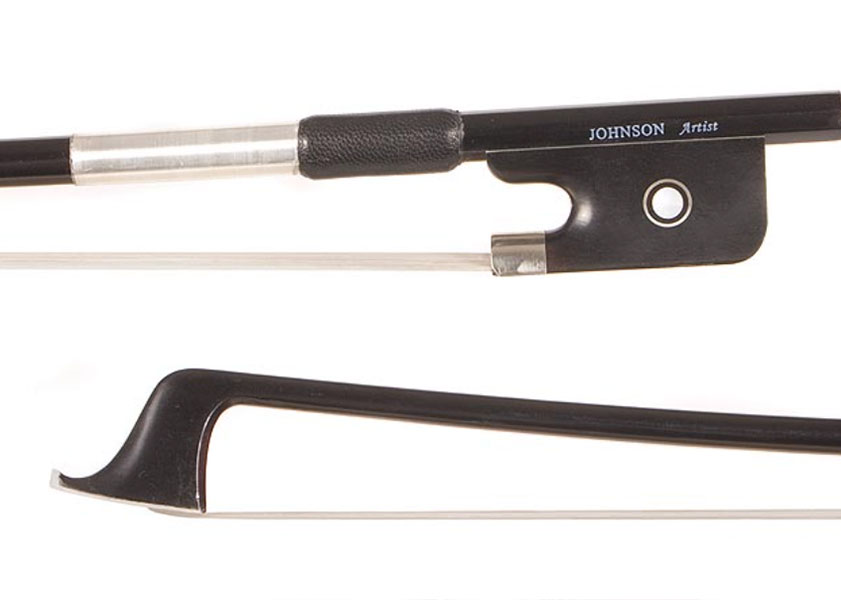
High-quality carbon fiber bows are popular because they’re strong, stable, and play similarly to wood bows. Manufacturers specifically design them to replicate the weight, balance, and flexibility of fine pernambuco. Many players find that mid-range carbon bows often outperform wooden bows at the same price point.
What to prioritize
When choosing a beginner bow, start with weight and balance. The average violin bow weighs about 60 grams, but how it feels is more important. The right bow won’t be too heavy or light, but equally balanced from frog to tip.
Next, examine the straightness and durability of the bow. When you look down the stick, a bow should not curve or twist to one side. And when you play, it should hold up under pressure. A weak or soft bow will easily collapse on the hair or flex too much laterally.
Try before you buy
When you visit the shop, bring your violin with you for comparison. Once you’ve chosen a few bows, play a short passage with each one back-to-back. Try a combination of bowing styles like legato, spiccato, and sautillé. Hopefully, you will hear subtle differences in clarity, sound fullness, and surface noise.
After narrowing down your choices, ask to test the bows for a week. Play them more extensively at home, in your ensemble or orchestra, and ask your fellow musicians and teacher for feedback.
Remember, as your technique improves, so will your bowing demands and hopefully your bow savvy. Until then, choose a bow that feels natural in your hand, not the most expensive in the shop.