Account
 Call Us
 Location

Proper violin sizing helps prevent injury, builds confidence, and makes learning more enjoyable. For parents and educators shopping for student instruments, it's important to know how fractional violins work.
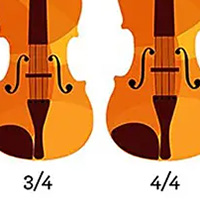
Unlike many instruments, violins come in multiple sizes to accommodate children as they grow. Fractional sizes typically range from 1/16 up to full size (4/4). These smaller instruments are not "toys," but fully functional violins designed to match a child's proportions.
Navigating these sizes can be difficult, so collaborating with a reputable retailer or string specialist can make a big difference. Selecting the right size helps children develop good techniques from the start, and quality, construction, and proper setup are integral to their musical progress.
Measuring arm length
One way to determine proper fit is by measuring arm length, using the violin size chart. To measure the 1/16 to 4/4 range, have your child fully extend their left arm straight out to the side, parallel to the floor. Measure from the base of the neck (or center of the neck joint) to the wrist.
If you have a violin, place it on your child's left shoulder and have them fully extend their left arm straight out, palm facing up. The scroll should land on the wrist, no further than the bottom of the palm. You can also have your child bend their arm and hold the neck, as if they're playing. The angle of their bent arm should be about 90 degrees.
Comfort is important for a variety of reasons. It not only affects tone production and learning speed, but allows young players to form correct hand frames, maintain relaxed shoulders, and develop smooth bow control. If your child looks strained or struggles to reach first position comfortably, it's time to reassess the size.
Common sizing mistakes
One of the most common sizing mistakes is choosing an oversized violin thinking a child will grow into it. While this may seem cost-effective, a violin that is too large forces a player to compensate with poor technique. Over time, this can create posture issues and physical discomfort.
Oversized instruments can also cause mental roadblocks. When a violin is difficult to hold or play, students may experience frustration and quickly lose motivation.
Another common mistake is focusing only on age or height rather than body proportions. Children grow at different rates, and arm length is a more reliable measurement than general size categories. And because many young students move up a size every 1–2 years, it's important to reassess sizing regularly.
Ultimately, proper violin sizing sets the foundation for everything that comes next — healthy technique, confidence, and real progress. So, take the time to measure accurately, consult a violin size chart, and prioritize comfort over convenience. Then sit back and watch your young musician succeed and grow.