Account
 Call Us
 Location

Proper violin storage helps protect an instrument from environmental damage, household accidents, and unnecessary wear.
In general, violins do best in stable indoor conditions. At Johnson String Instrument, we recommend keeping stringed instruments in an environment of approximately 60–70°F with relative humidity between 40% and 60%. Large or sudden temperature changes can cause buzzing, loose pegs, cracks, open seams, and changes in sound or playability.
Fortunately, maintaining your violin’s safety at home does not require a specialized music room. A secure case, a carefully selected location, and attention to indoor humidity is usually enough protection for most instruments.
Best storage practices
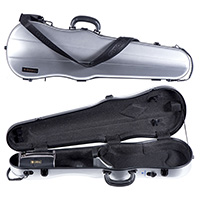
Consistent case use is one of the easiest ways to protect a violin. After playing, wipe excess rosin dust and perspiration from the instrument with a clean, soft cloth. Loosen the bow hair, place the bow in its holder, and return the violin to its case. Close and secure every latch or zipper, even when your instrument is put away for a few hours.
A secure case protects a violin from falling objects, accidental bumps, dust, spills, and curious hands. It also creates a more stable environment than leaving it exposed in a room. We recommend an instrument is safest in its closed case whenever it’s not being used.
For room placement, store your closed case in an interior area where temperature and moisture levels remain relatively consistent. A bedroom, music room, or interior closet may work well, provided the space is dry, comfortable, and regularly climate controlled.
Keep your case flat in a secure location where it cannot fall or be stepped on. Avoid placing heavy boxes, books, or other objects on top of it. A violin case offers excellent everyday protection, but it’s not designed to support heavy weight.
During dry winters or periods of heavy indoor heating, use a hygrometer to monitor the humidity in the room or inside the case. An instrument or room humidifier may help when conditions become too dry, but in humid summer weather, air conditioning or a dehumidifier may be necessary. Always follow the instructions provided with any humidification product, since excessive moisture can also damage an instrument.
What to avoid
Although decorative hanging systems and wall-mounted violin displays may look attractive, they expose the instrument to avoidable risks. An uncovered violin can collect dust, be knocked from its hanger, or experience the room’s changing temperature and humidity more directly. Unless a violin is displayed temporarily in a carefully controlled setting, storing it in a closed case is the safer choice.
Keep the instrument away from radiators, fireplaces, space heaters, heating vents, and other heat sources. Direct sunlight can also warm a violin and its case surprisingly quickly. Never leave the instrument beside a sunny window, or in an attic, garage, or parked vehicle. Excessive heat can soften varnish, weaken adhesives, and stress the wood.
Homes with children or pets require a few additional precautions. Store the case beyond the reach of young children and away from areas where a dog or cat could jump, scratch, chew, or knock it over. Don’t leave the violin on a chair, sofa, bed, or floor, even during a brief break from practicing. These are the easiest places for an instrument to be sat on, stepped on, or pushed to the ground.
Finally, remember that not all violin cases provide the same level of protection. A worn case with broken latches, damaged padding, or a poor fit may allow the instrument shift position or become exposed. So, check your case periodically and replace it when it no longer closes securely or supports your violin correctly.
Good storage habits quickly become part of a musician’s daily routine. By cleaning your violin after playing, returning it to a secure case, choosing a stable room, and managing temperature and humidity, you can help keep your instrument safe and ready for your next practice or performance.